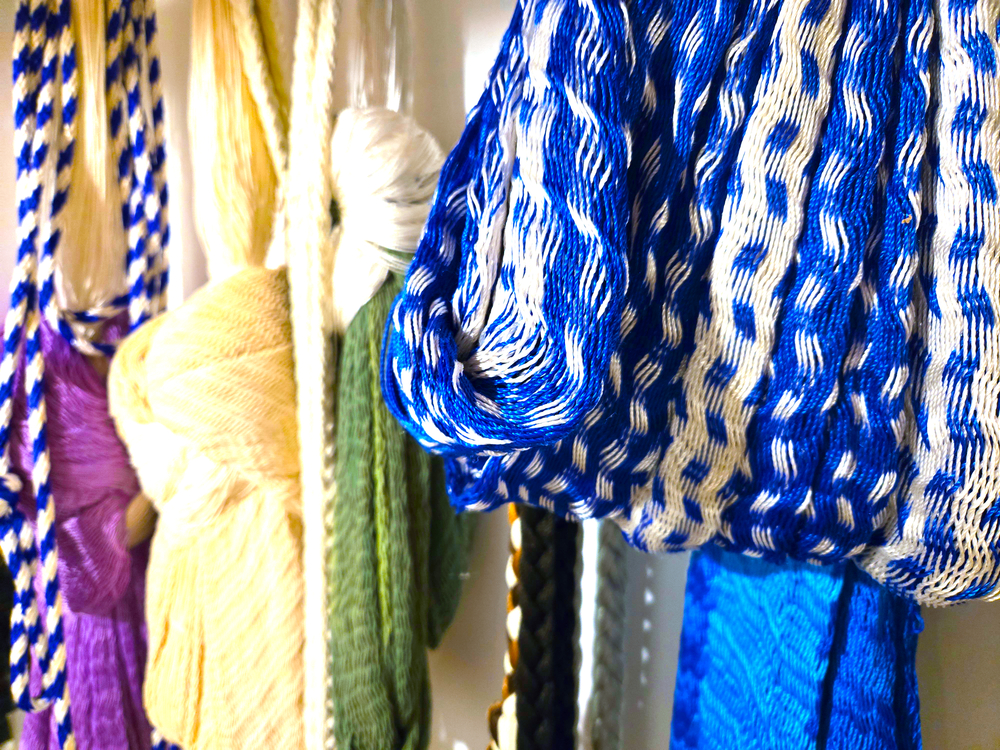
I arrived in Yucatán, Mexico, in 2005, bright eyed and bushy tailed, and one of my top goals was to buy myself a quality hammock. (Full disclosure, I now have about 8 or so. I’m kind of an expert at this point.)
I’d gotten one in Mexico City years ago as a college student, and it was a sturdy nylon one that served me well throughout my college years but I was ready for an upgrade. Before I go on, let me make sure that we’re all on the same page here: I am not talking about a Western-style hammock, the kind that’s like a blanket with two wooden struts at each end that spread it out, Aladdin’s carpet-like, making it as unstable as a carnival game. I grew up with one of those kinds of hammocks and hated it. When I got to Mexico for the first time and sunk deep into the wonder that is a Yucatecan hamaca, it was a revelation greater that if I’d seen a deity from above.
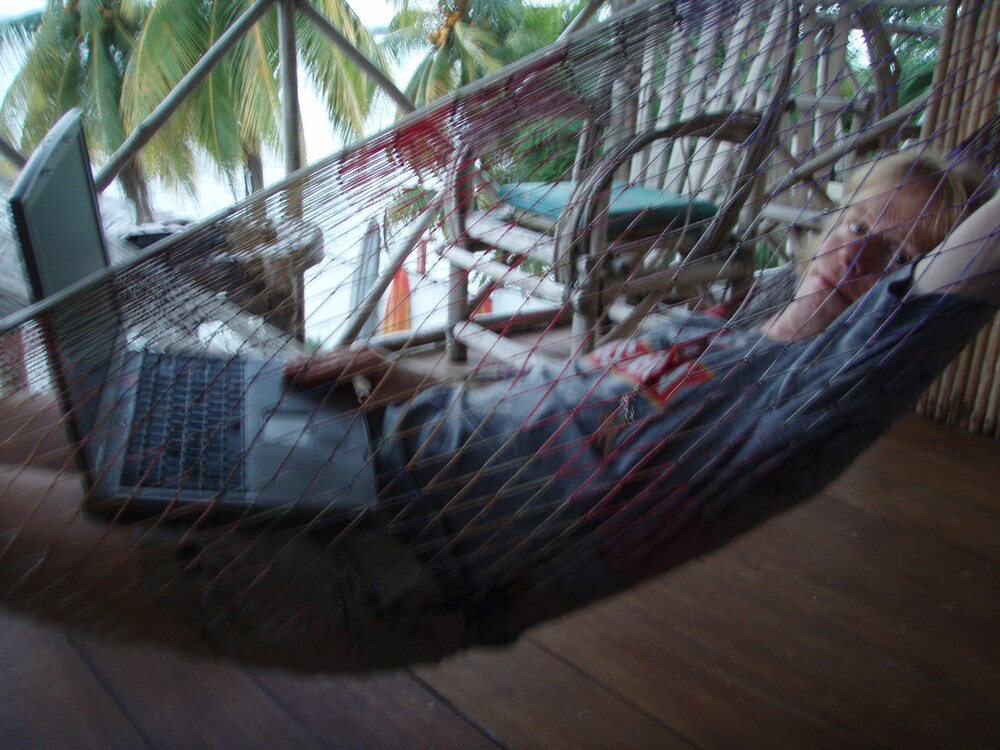
A Yucatecan hamaca cradles you within it, supports you, done right, it is nearly impossible to fall out of. The fibers hug your form and whole families (of five, six, seven people!) can sleep in one “grande, family size.” It’s economical, it’s practical, and with the easy additions of a mosquito net and a tarp, it’s insect- and rain-proof as well. There’s even a popular book about all the different love-making options one has while enjoying a Yucatecan hammock.
Before you go out and grab a hammock from the first person hawking them on the street, though, here are five things to look for. These tips come mostly from my close friend, Mauricio, of Puerto Morelos, who has made hammocks by hand his entire life in the village most famous for them: Tixcocob, outside of Mérida. Nowhere in the world will you find higher quality hammocks. I highly recommend a visit there.
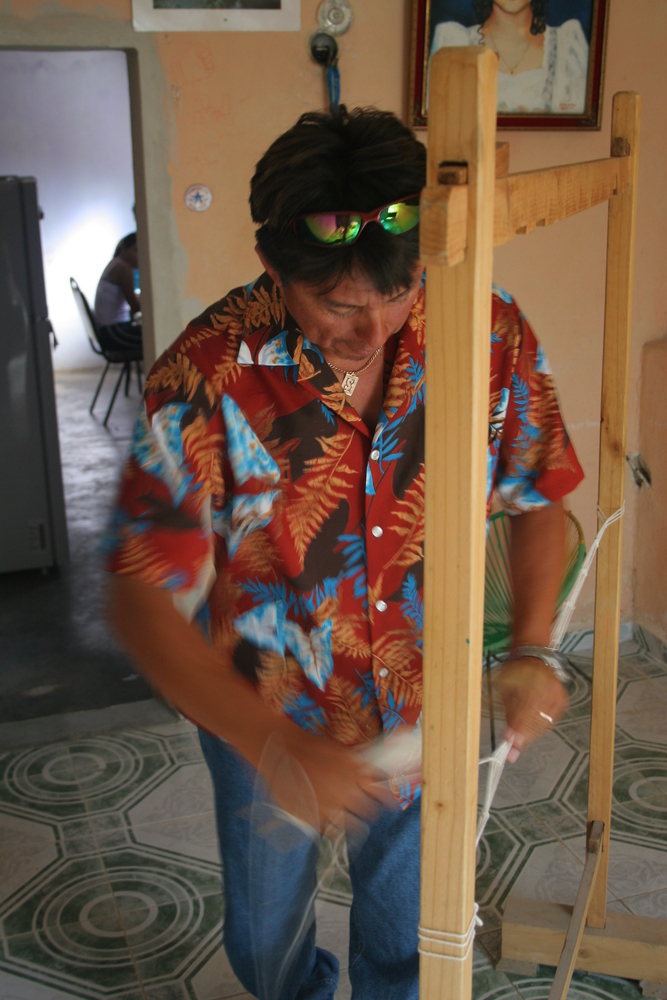
Here’s what Mauricio had to say:
1. Go for smaller size thread.
The best hammocks are made with fine thread, thin cotton or nylon, not thick nylon. If it’s made from fibers about the thickness of kite string, you’re good to go. If it’s more like a soccer net, skip it.
2. Consider the weave.
Cheaper hammocks have giant gaps in the weave and look more like a net you’d use for fish trawling than anything you’d want to sleep in. They’ll do in a pinch, but if you’re in Mexico, take the time to seek out a real work of art. Yes, you’ll pay more for it, but it will last you a lifetime.
3. Count how many threads are along the edges.
Poor quality hammocks only have a few (3-5) threads at the edges. Why does this matter? Because when those threads fray through, the hammock falls apart. And over time, they will fray. A hammock with 10 or 12 threads will likely last a lifetime, if not generations. So count those threads and don’t buy any with less than 8.
4. Where is the vendor?
Where are you getting the hammock? Is it from a big box store? A peddler on a beach? Someone in a big city? You’ll get your best prices by going straight to the source: Find someone like Mauricio in Puerto Morelos, or consider a trip to Tixcocob itself, where you’ll see a hammock rack in nearly every household.
5. Be sure to ask for “arms.” (In Spanish, “brazos.”)
These are the pieces of braided cord that you wrap one end around a tree branch or hook onto hammock hooks, and attach the other end to the hammock’s loops. Never hang a hammock directly by the loops, as the cords will quickly fray through and (like number 3 above) once they’re gone, your hammock is ruined. By always tying the brasos to the hammock and then using them to attach it to the support, you’ll be able to enjoy your hammock for decades.
If you do choose to go home with a hammock, choose your seller carefully. Mauricio has become a close friend, someone with expertise and experience vastly beyond anything I would have. Don’t be afraid to strike up a conversation with a prospective hammock dealer. See what they’ve got to say. If you feel they don’t have much experience or they’re trying to claim that a hammock with 5 threads on the edges is “high quality” then (politely) look elsewhere.
If you’re serious about looking for a hammock, feel free to contact me and I’ll put you in touch with Mauricio and his brother, Martin. They’re great people, they need the business, and they’re experts at what they do. You’ll go home with a hammock that’s one of the best out there…and you’ll help a working family as well. A win-win.